Professor Moriarty: Fiction’s Original Supervillain?
How did a character with so few appearances could cast such a long, menacing shadow over the world of fiction?
Let’s take a stroll together through the foggy streets of Victorian London, where gas lamps flicker and the air is thick with secrets. Somewhere in the shadows, a figure waits, a man whose name has become synonymous with evil genius, the “Napoleon of Crime” himself: Professor James Moriarty.
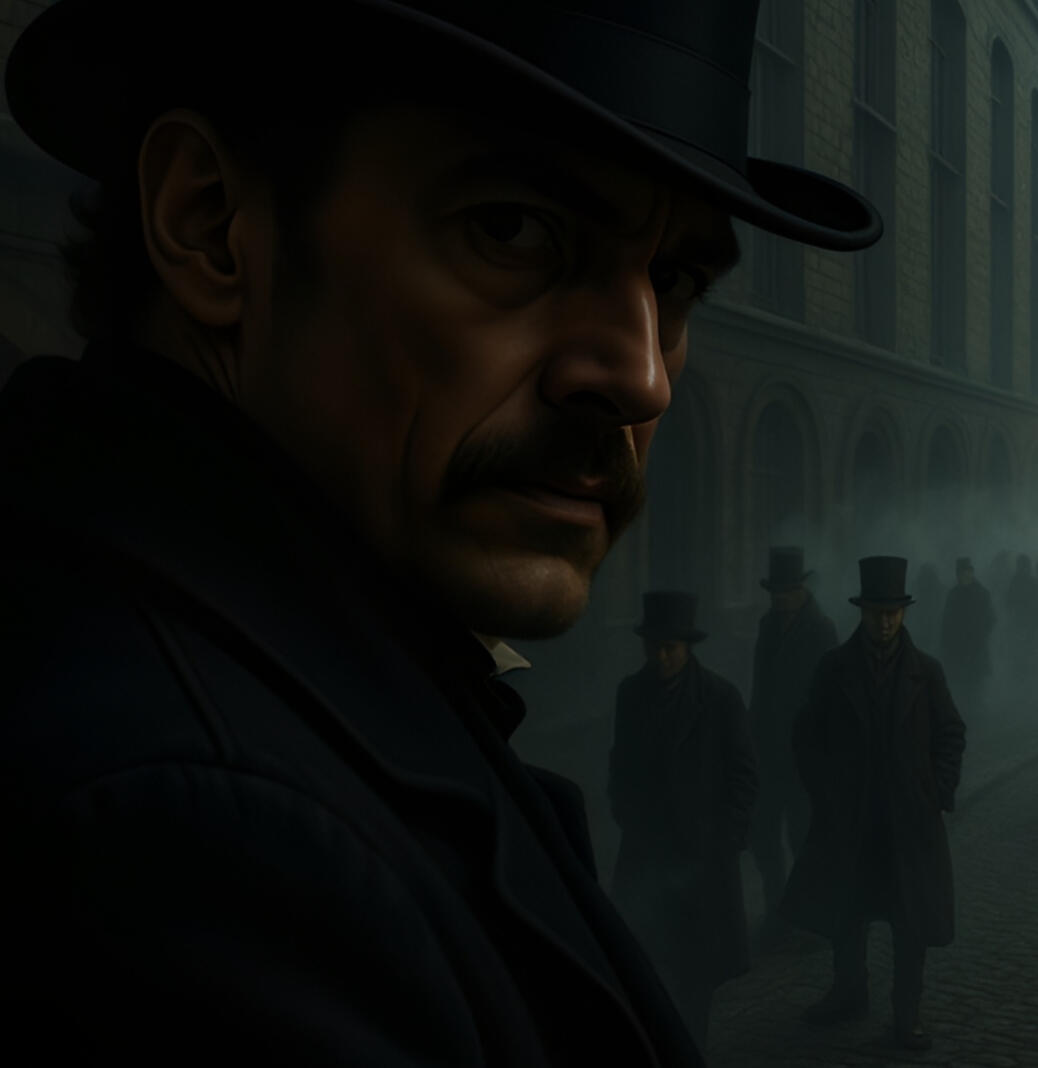
OG Supervillain
If you’ve ever wondered how a character with so few appearances could cast such a long, menacing shadow over the world of fiction, you’re in the right place. Settle in, friend, because we’re about to unravel Moriarty’s entire existence, from his birth in the mind of Sir Arthur Conan Doyle to his undying legacy as literature’s original supervillain.
The Birth of a Nemesis: Why Moriarty Was Created
To understand Moriarty, you first have to understand his creator’s predicament. By the early 1890s, Arthur Conan Doyle was, quite frankly, sick to death of Sherlock Holmes.The detective had become a sensation, but Doyle felt trapped, churning out story after story for a public that couldn’t get enough.He once likened the experience to being force-fed foie gras, which is delicious at first, but quickly overwhelming. Doyle wanted out, and he needed a way to end Holmes’s adventures with a bang, not a whimper.Enter Professor Moriarty. Doyle conjured him almost out of thin air, introducing him in The Final Problem (1893) as a narrative device, a villain so formidable that only he could plausibly bring about Holmes’s demise.Moriarty was not a slow-burning adversary built up over many stories; he was, in essence, Doyle’s instrument of destruction, a character created to kill Sherlock Holmes and, with him, the author’s own creative shackles.
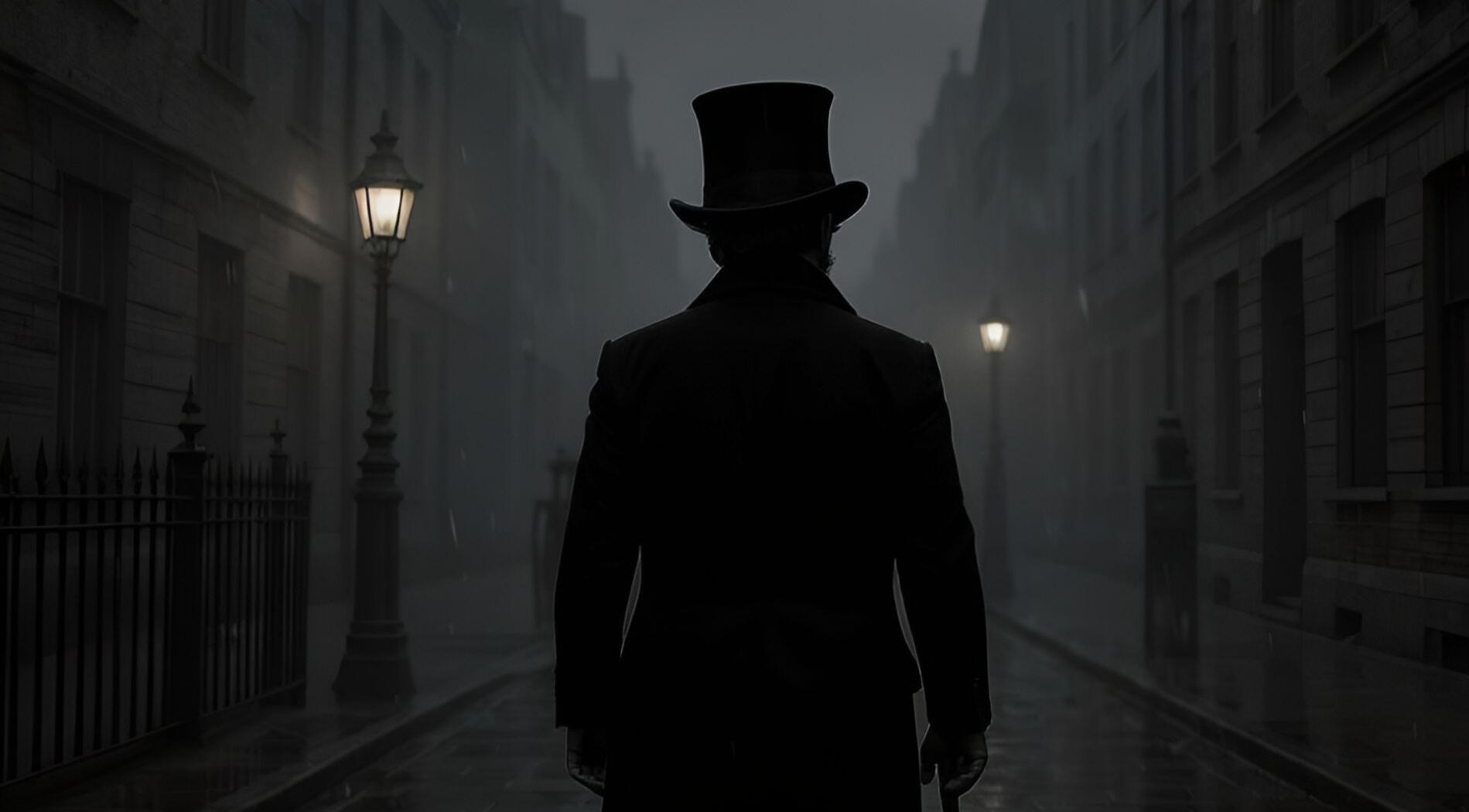
The Purpose of Moriarty?
Moriarty’s purpose was clear: he was to be Holmes’s equal and opposite, the dark reflection of the detective’s brilliance.Doyle needed a villain who could credibly threaten Holmes, someone who wasn’t just another criminal but a mastermind, a spider at the center of a vast web of crime.Holmes himself describes Moriarty as “the Napoleon of crime,” a phrase Doyle borrowed from a real Scotland Yard inspector’s description of the infamous criminal Adam Worth.This wasn’t just a man who committed crimes; this was a man who orchestrated them, pulling the strings from the shadows and letting others do his dirty work.Moriarty’s genius was not limited to crime. In his fictional biography, he was a mathematical prodigy, a university professor who published a treatise on the binomial theorem and a respected work called The Dynamics of an Asteroid.But, as Holmes notes, there was something “diabolical” in his blood, a hereditary criminality that, when combined with his intellect, made him infinitely more dangerous.He is the ultimate mirror to Holmes: both are brilliant, both are outsiders, but where Holmes uses his gifts for good, Moriarty uses his for evil.
Doyle’s Thoughts on His Creation
Doyle’s own feelings about Moriarty were, in a word, utilitarian. He created the character not out of a burning desire to explore the mind of a criminal genius, but because he needed a worthy adversary to justify Holmes’s death.In fact, Moriarty’s sudden appearance, after two novels and twenty-three short stories with no mention of such a criminal mastermind, has led many to see him as something of an afterthought, a deus ex machina dropped into the narrative to serve a very specific purpose.Yet, despite this, Moriarty’s impact was immediate and profound, both within the stories and in the wider world of fiction.
Connection with Sherlock Holmes
The relationship between Holmes and Moriarty is the stuff of legend. They are, in many ways, two sides of the same coin. Both are driven by intellect, both are obsessed with puzzles, and both operate outside the norms of society.But where Holmes seeks justice, Moriarty seeks power and profit. Their rivalry is not just a battle of wits; it’s a battle of philosophies, of order versus chaos, good versus evil.Holmes himself admits that Moriarty is his intellectual equal, perhaps even his superior in some respects. In The Final Problem, Holmes tells Watson that Moriarty is the only man who has ever managed to outthink him, the only adversary who truly poses a mortal threat.This is what makes their final confrontation at the Reichenbach Falls so compelling: it’s not just a fight between detective and criminal, but a clash of titans, each determined to destroy the other, even at the cost of their own lives.

Why The Hatred For Holmes?
The enmity between Holmes and Moriarty is rooted in mutual recognition. Holmes, through his investigations, uncovers the existence of Moriarty’s criminal empire and begins to dismantle it, case by case.Moriarty, in turn, sees Holmes as the only real threat to his power. Their hatred is not personal in the way of petty grudges; it’s the inevitable collision of two unstoppable forces.Moriarty is obsessed with maintaining his supremacy, and Holmes is the one man who can topple him. When Holmes finally moves against him, Moriarty vows revenge, promising that if Holmes brings about his destruction, he will do the same to Holmes.It’s a duel to the death, with no room for compromise.
Does He Eventually Kill Holmes?
The answer is, in a way, yes and no. In The Final Problem, Holmes and Moriarty face off at the edge of the Reichenbach Falls in Switzerland. After a fierce struggle, both men plunge over the edge and are presumed dead.Watson, arriving too late, finds only signs of a violent fight and a note from Holmes. For years, readers believed that both men had perished, and Doyle intended it to be so.The Final Problem was originally published in the United States, in various newspapers on November 26, 1893. It was then published in The Strand Magazine in the United Kingdom in December 1893.But public outcry was so great that Doyle eventually resurrected Holmes, ten years later, in The Adventure of the Empty House, revealing that the detective had faked his own death.The story first appeared in the US in Collier’s magazine on September 26, 1903, and then in the UK in The Strand Magazine in October 1903. Moriarty, however, remains dead, his body never recovered, his fate sealed as the one man who could truly threaten Sherlock Holmes.

Was Professor Moriarty’s True Identity Ever Revealed?
Moriarty’s true identity, at least in the canonical stories, is as much a mystery as the man himself. We know his name, James Moriarty, and that he was once a respected professor of mathematics, but beyond that, details are scarce and often contradictory.Some later adaptations and pastiches have tried to fill in the gaps, suggesting secret government connections, but Doyle himself kept things deliberately vague.This ambiguity only adds to Moriarty’s mystique, making him less a man and more a force of nature, an embodiment of evil intellect.In terms of his actual name, Sir Arthur Conan Doyle’s choice of "Professor James Moriarty" is reportedly steeped in both personal and cultural resonance. The surname "Moriarty" is distinctly Irish, derived from the Gaelic "Ó Muircheartaigh," which translates to "skilled navigator" or "sea warrior."This name is historically associated with County Kerry in Ireland and reflects a heritage of maritime skill and strength. Doyle himself was of Irish descent, and the use of an Irish name for his most formidable villain may have been a subtle nod to his own background and the complex Anglo-Irish dynamics of his era.Additionally, literary scholars have speculated that Doyle’s Moriarty was partly modeled on Irish political figures such as John O’Connor Power, a Fenian leader and professor, further reinforcing the Irish connection.While Conan Doyle never explicitly states Moriarty’s nationality in the canonical stories, the evidence strongly suggests that he intended the character to be Irish, or at least of Irish descent.The surname’s origin is unmistakably Irish, and several literary analyses and adaptations have embraced this interpretation. For example, Anthony Horowitz’s novel Moriarty places his birthplace in Ballinasloe, County Galway. The character’s Irishness has become widely accepted in literary circles, even if it was never overtly stated by Doyle himself.
How Many Books Does Moriarty Appear In?
Here’s where things get interesting. Despite his towering reputation, Moriarty appears directly in only two of Doyle’s original stories: The Final Problem and The Valley of Fear (the latter being a novel in which he is mentioned but does not appear in person).He is referenced in five other stories: The Adventure of the Empty House, The Adventure of the Norwood Builder, The Adventure of the Missing Three-Quarter, The Adventure of the Illustrious Client, and His Last Bow, but always as a shadowy presence, a name whispered in fear or awe.That’s it. Two direct appearances, five mentions, and yet he is forever cemented as Holmes’s archenemy.A technicality is that in The Valley of Fear, Moriarty doesn’t actually interact with any of the other characters; however, he has a significant role in the background. Holmes spends much of the story explaining Moriarty’s criminal empire and how it connects to the case at hand.This makes Moriarty feel like a major character, but technically, he never steps onto the stage. He is the mastermind behind the scenes, but not a participant in the events as they unfold. So, he is both directly involved and only mentioned - a confusing situation!
Is Moriarty the Original Supervillain of Literature?
This is where things get really fun. While literature is full of villains, Moriarty is often credited as the first true “supervillain”, a criminal mastermind who operates on a grand scale, orchestrating evil from the shadows and serving as the hero’s intellectual equal.Before Moriarty, most villains were either thugs or aristocratic schemers, but none had the scope, the ambition, or the sheer genius of Doyle’s creation.He set the template for every archenemy to come, from James Bond’s Blofeld to Batman’s Joker. The very idea of the “archnemesis” owes much to Moriarty’s brief but unforgettable presence.
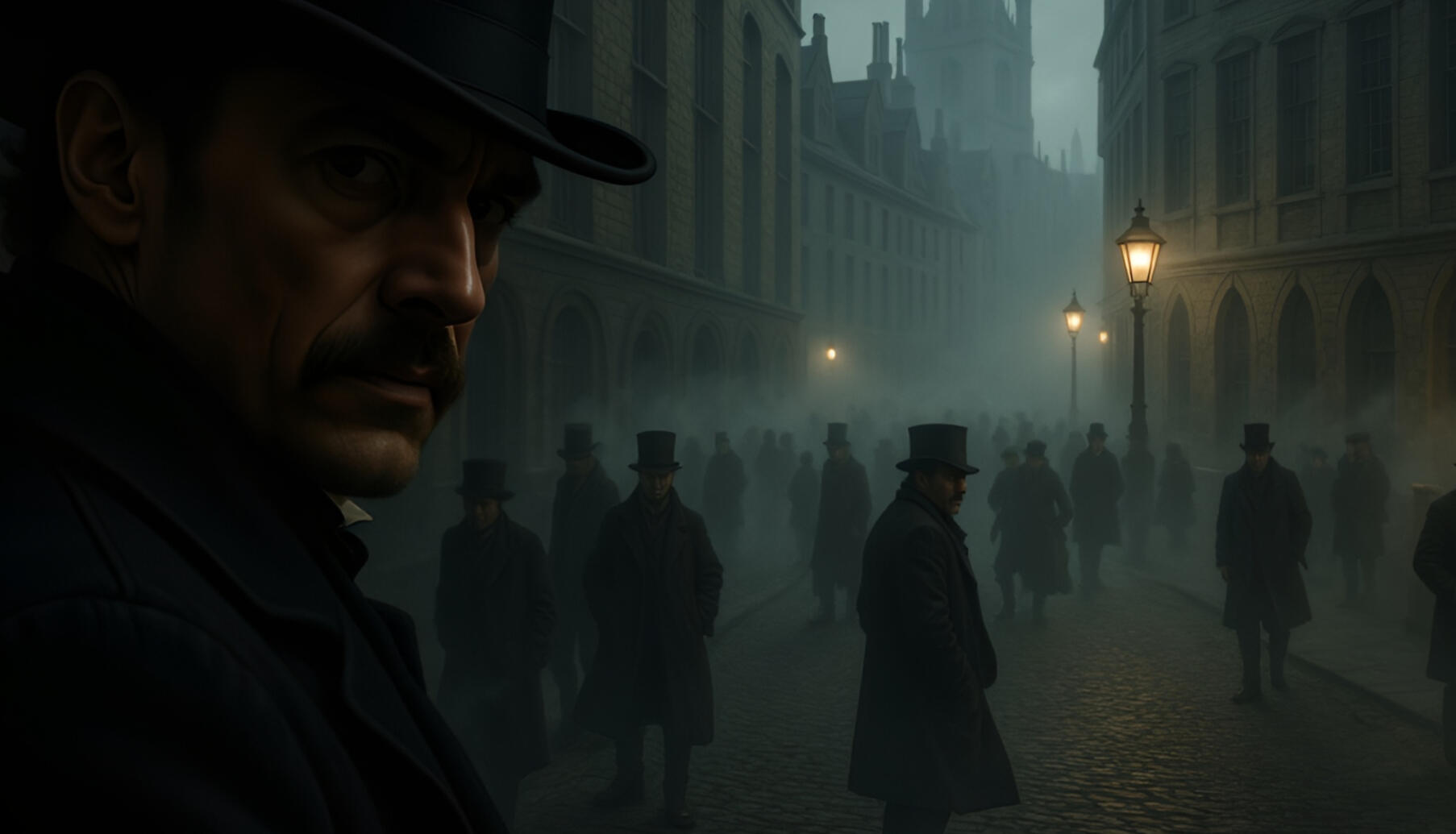
The Lingering Shadow of the Professor
Despite his limited appearances, Moriarty’s legacy is immense. He has become the archetype of the criminal mastermind, the standard by which all other villains are measured.His influence can be seen in countless adaptations, from film and television to comics and video games. Every time a hero faces a nemesis who is their equal in intellect and opposite in morality, you can trace the lineage back to Moriarty.But it’s not just his role as a villain that keeps him alive in the public imagination. Moriarty fascinates us because he is, in many ways, the dark side of genius.He shows us what happens when brilliance is divorced from conscience, when intellect is used not to uplift but to destroy. He is the ultimate “what if?”. What if Holmes had chosen a different path? What if genius, untempered by morality, was let loose upon the world?So why, after all these years, does Moriarty still captivate us? Part of it is the mystery. We know so little about him, and what we do know is tantalizingly incomplete.He is a blank canvas onto which we can project our fears and fascinations. But more than that, Moriarty endures because he is the perfect foil to Holmes. He is the only villain who truly challenges the hero, who makes us believe, if only for a moment, that the forces of darkness might actually win.In a world where most villains are outwitted and outclassed, Moriarty stands apart as the one who almost succeeded. In fact, he did succeed, and if Sir Arthur Conan Doyle had stuck to his guns, Holmes would have washed away at the bottom of the waterfall, never to be seen again.However, Conan Doyle buckled under pressure, so all that is left of Moriarty is the shadow that gives Holmes his light, the chaos that defines the order. He has become not just a character, but a symbol of the eternal struggle between good and evil, intellect and madness, hero and villain.But perhaps the most important thing to remember is this: Moriarty endures not because of the number of pages he occupies, but because of the space he fills in our imaginations.He is the villain we love to hate, the genius we fear to face, and the dark mirror that makes our heroes shine all the brighter. And as long as stories are told, the “Napoleon of Crime” will never truly die.
© All rights reserved.